


WHAT IS AN ANXIETY DISORDER?
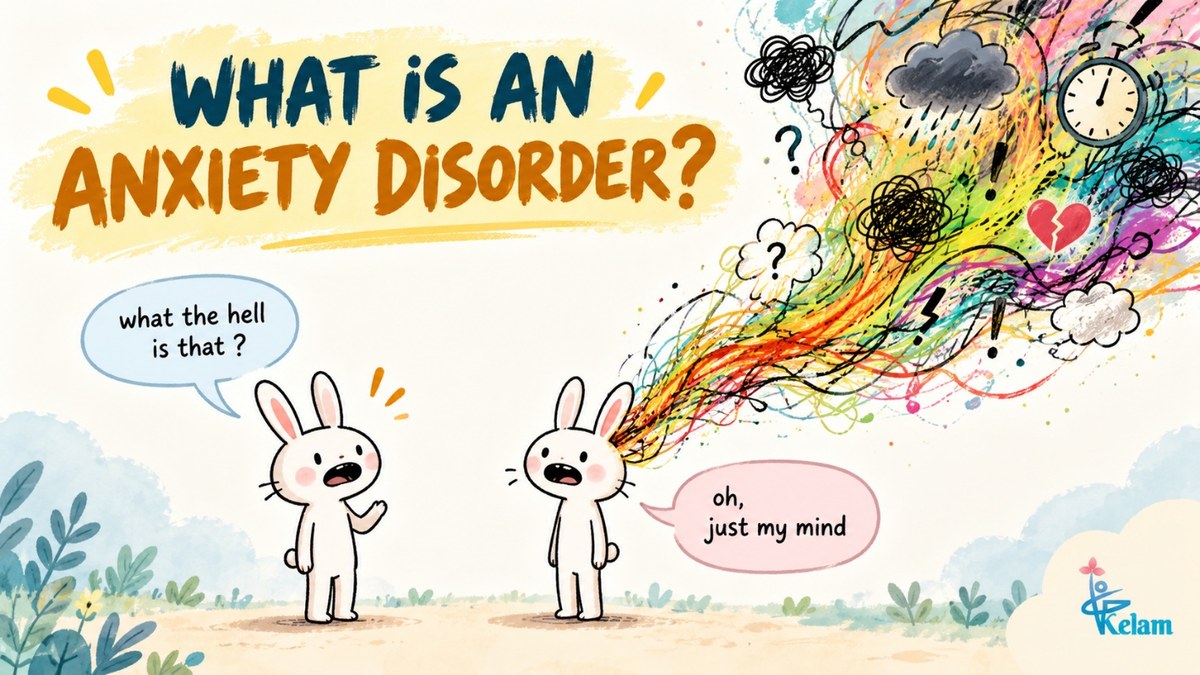
According to the American Psychiatric Association, anxiety is a normal response to the pressures of life and can be beneficial in certain situations. Anxiety helps us stay alert to potential dangers and better prepare ourselves. We all know the feeling of being anxious before an exam or a job interview. In fact, these worries can motivate us to study harder, learn more, and prepare ourselves better. However, an anxiety disorder differs from ordinary anxiety. Here, the intensity and duration of the worry are excessive and go beyond what is necessary.
Necessary anxiety and unnecessary anxiety
We can think of anxiety as falling into two categories: necessary and unnecessary. The difference depends on whether the level of anxiety is proportionate to the actual likelihood of something happening.
For example, when you are on an airplane, you may worry about the possibility of a plane crash. However, you know that the probability is extremely low, because air travel is far safer than traveling by road or by water. Therefore, you may give the thought only a few brief moments of attention. Then you continue with your own plans.
On the other hand, you may become excessively worried about the plane crashing and can no longer focus on other activities. In that case, this may be an anxiety disorder.
How common is an anxiety disorder?
Anxiety disorders are among the most common mental health conditions. In addition, scientists estimate that as many as thirty percent of adults will experience one at least once in their lifetime.
You are not alone. Indeed, many well-known people have also struggled with anxiety disorders. Adele, Albert Einstein, Lady Gaga, Emma Stone, Oprah Winfrey, Demi Lovato, and many others have experienced what you may be going through.
The types of anxiety disorder
Anxiety disorders can take many different forms and are classified into several types:
- Generalized Anxiety Disorder (GAD)
- Phobias, including Specific Phobia
- Panic Disorder
- Social Anxiety Disorder
- Post-Traumatic Stress Disorder (PTSD)
- Health Anxiety Disorder
All of these forms share one main feature: persistent fear or anxiety that is disproportionate to reality. Moreover, this fear occurs in situations that an average person would not perceive as threatening.
Common manifestations of anxiety disorders
- Sleep disturbances and persistent insomnia
- Excessive anxiety, with a tendency to constantly imagine the worst possible outcome
- Difficulty concentrating, with reduced attention, memory, and thinking abilities
- Reduced motivation and a loss of interest in things that once gave you motivation and a sense of purpose
Physical symptoms of an anxiety disorder
- Rapid heartbeat: You may clearly feel your heart beating unusually fast or irregularly. When this happens, you may feel extremely tired and anxious.
- Headaches: A diffuse pain throughout the head, especially around the frontal area. The intensity of the headache may increase with the level of anxiety you are experiencing.
- Excessive sweating, even when you are not engaging in much physical activity.
- Increased activity of the sebaceous glands in the skin.
- Rapid or shallow breathing.
- Shortness of breath or difficulty controlling your breathing: Sometimes you may even feel as though you are about to stop breathing.
- Stomach pain: Ranging from mild discomfort to severe pain, sometimes accompanied by digestive problems.
- Dizziness or lightheadedness: You may feel as though everything around you is blurred or unreal.
- Feeling unusually hot or cold.
- Fear of illness or death.
All of these symptoms are commonly referred to as manifestations of autonomic nervous system dysregulation.
Living with an anxiety disorder: a first step
You may experience only a few of the symptoms described above. Often, however, you experience many or even all of them, along with additional symptoms. Furthermore, the intensity and frequency of these symptoms vary from person to person.
What you are experiencing may feel overwhelming at times. Yet understanding these symptoms is an important first step toward learning how to respond to them with greater calm and compassion.
If you prefer to read this content in Vietnamese, you can find the Vietnamese version of this article here. In addition, the Kelam Center team is always ready to walk this journey with you.
Lưu ý: Thông tin này chỉ nhằm mục đích tham khảo. Để được tư vấn hoặc chẩn đoán y tế, hãy hỏi ý kiến của chuyên gia y tế.